Why In-Person Experiential Marketing Is Making a Comeback
Key takeaways
- Digital targeting lost precision as privacy changes took hold: app-measurement firms have consistently found that roughly three-quarters of iOS users decline tracking, and fraud researchers put annual ad fraud losses in the tens of billions of dollars.
- The experiential comeback is in the budgets: media research firms pegged global experiential spend near $140 billion in 2025, growing faster than overall marketing budgets.
- Live events are first-party data engines. Samples handed out, badges scanned, and booth conversations feed the retargeting and content that digital now struggles to source on its own.
- Activations fail on permits, staffing, and freight far more often than on creative. Lock the logistics before you fall in love with the concept.
- Measure to the activation's job: cost per engagement for awareness plays, sample-to-sale where it is trackable, and pipeline from booth meetings for B2B.
For roughly a decade, the smartest dollar in marketing was a precisely targeted impression. Then the precision started leaking out of the system, the prices kept climbing anyway, and marketers began re-reading line items they had cut in 2020: sampling teams, street activations, trade show programs. What looks like nostalgia is actually arithmetic.
We work on the execution side of this business, so we notice trends in purchase orders before we read about them in trade press. The purchase orders say in-person is back. Here is why, with the honest numbers.
Why digital targeting got crowded and less trustworthy
Privacy changes drained the data that made digital targeting precise, while fraud and rising auction prices ate into what remained. The channel still works; it just no longer works unattended, and it no longer works cheap.
The turning point was Apple's App Tracking Transparency framework in 2021. App-measurement firms have consistently reported that roughly three-quarters of iOS users decline tracking when prompted, and many advertisers saw mobile retargeting audiences shrink by 40 percent or more. Widely cited business-press analyses put the average rise in customer acquisition costs at roughly 30 to 40 percent in the year that followed. Third-party cookies added a slower version of the same story: years of deprecation announcements and reversals left planners unable to count on the browser data they had built strategies around.
Fraud compounds the signal problem. Ad-fraud researchers put annual global losses in the tens of billions of dollars, with some projections running far higher, and traffic studies routinely attribute a large share of web traffic — by some measurements approaching half — to bots rather than people. Meanwhile, every brand that lost its proprietary targeting edge now bids in the same auctions with the same modeled audiences, which is exactly the recipe for rising CPMs and ad fatigue. None of this makes digital useless. It makes an unduplicated, verifiably human channel worth paying for again.
The comeback shows up in budgets, not just talk
Experiential spending is growing faster than marketing budgets overall. Media research firms estimated global experiential spend at close to $140 billion in 2025, up roughly 8 percent year over year, with faster growth projected for 2026 on the strength of major sporting events.
The trade show side tells the same story. The Center for Exhibition Industry Research's quarterly index showed U.S. B2B exhibitions climbing back to within about 5 percent of pre-pandemic performance by the end of 2024, with exhibit space sold nearly fully recovered. And B2B budget research has repeatedly found event spending growing at close to double digits even in years when overall B2B marketing budgets were flat or shrinking — companies are running fewer, bigger events rather than cutting the channel.
The comeback is not confined to convention centers. We see it across five formats:
- Trade shows, where booth meetings remain the densest concentration of qualified buyers most B2B brands see all year.
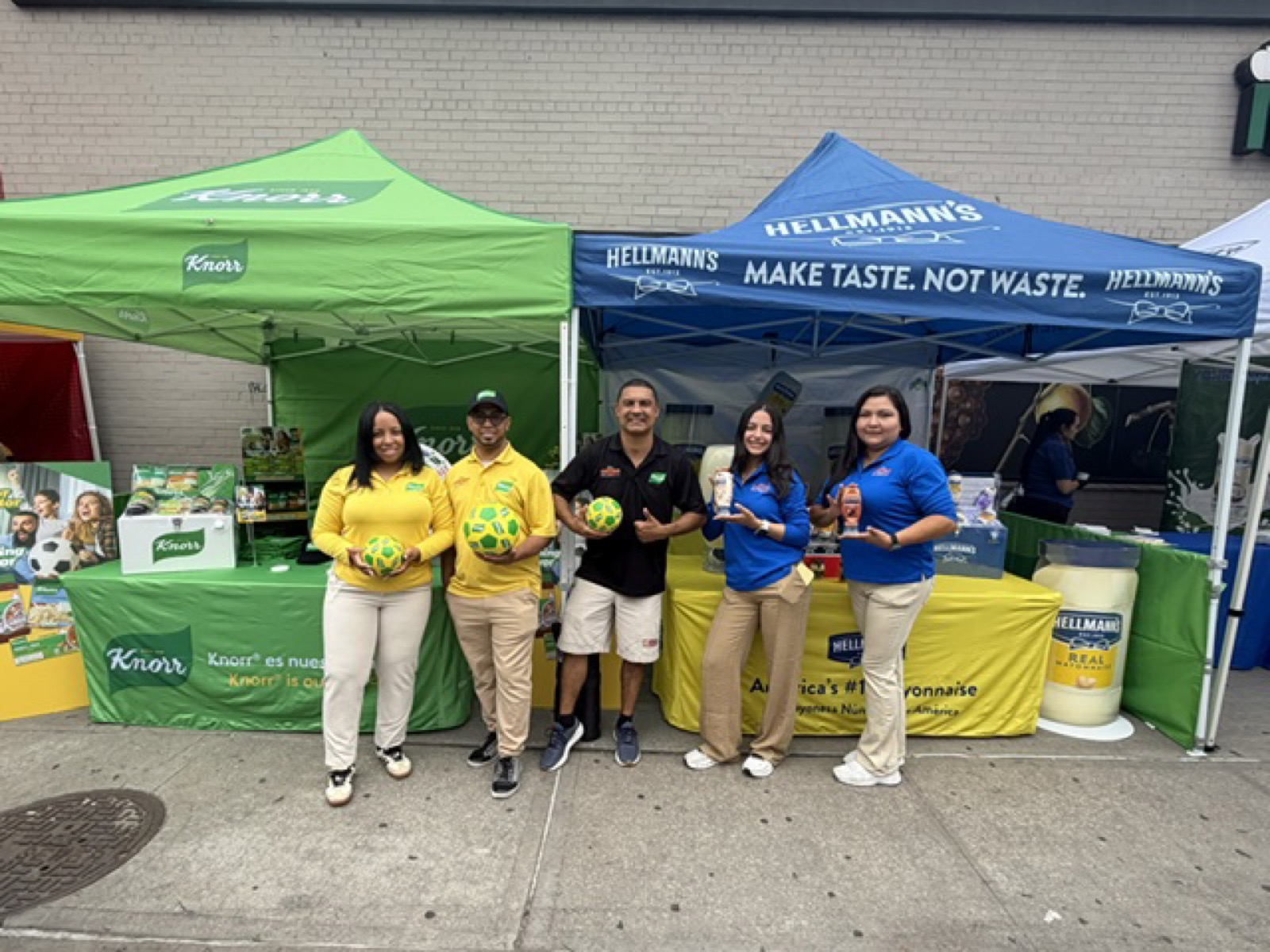
- Street-level activations: branded footprints at festivals, races, and high-traffic corridors.
- Sampling programs, in-store and out, where the product itself is the ad.
- Pop-ups that give digital-native brands a temporary physical address.
- Community and sponsorship events, where a brand shows up as a neighbor rather than an interruption.
What an hour in person does that a thousand impressions cannot
In-person contact is the only channel that reaches every sense and puts product into a real human hand while you watch the reaction. Nothing else in the plan can make that claim.
A sampled product gets tasted, held, smelled — trial without a checkout page in the way. A booth conversation is self-qualifying: nobody wanders into a twenty-minute demo by accident the way they scroll past an ad. And a well-produced activation is a content factory. One afternoon of sampling generates photography, short-form video, user posts, and sometimes local earned media that a brand can run through its digital channels for weeks. The impression count starts at the tent and multiplies afterward.
Experiential and digital are complements, not rivals
The brands getting the most from live events treat them as first-party data engines for digital, not replacements for it. This is the part of the comeback that gets missed when it is framed as a retreat from technology.
Every opt-in email captured at a sampling table, every badge scanned at a booth, every QR code redeemed at a pop-up is consented, first-party data — precisely the raw material digital targeting now starves for. Capture at the event, retarget afterward, and the two channels reinforce each other: geo-targeted media builds a crowd before the activation, and the activation feeds audiences and content back into the media plan. The brands doing this well spend more on both channels, not less on one.
The execution catch: activations fail on logistics, not ideas
In our experience the concept is rarely what kills an activation. The missing permit, the power drop nobody ordered, the staffing no-show, or the late truck is. Experiential punishes weak operations more brutally than any digital channel, because there is no pausing a live event to fix a mistake.
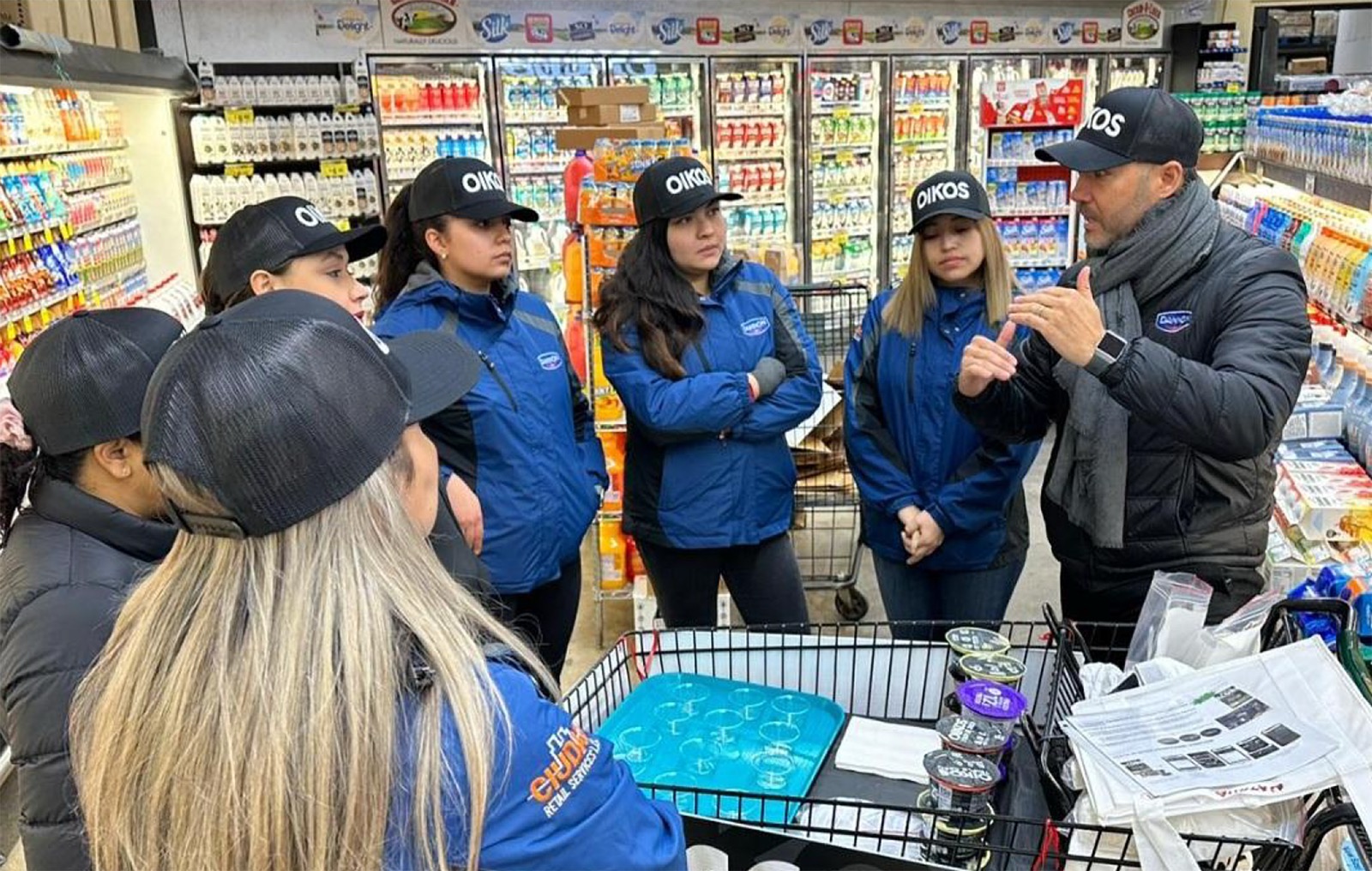
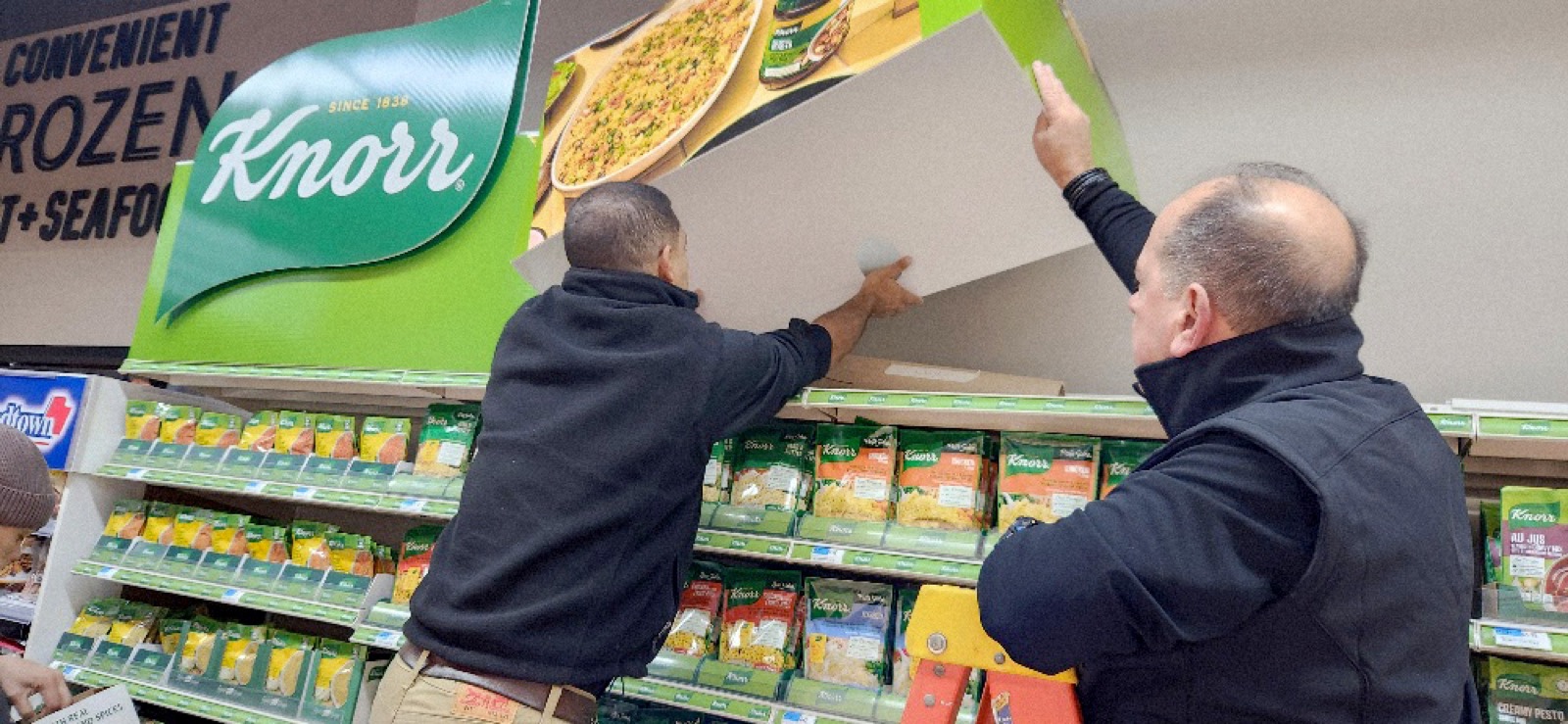
An outdoor sampling program is a small logistics business: fabrication deadlines, freight windows, municipal permits, certificates of insurance, health department rules if there is food, trained field staff in the right shirts in the right city, cold chain if the product needs it, and a weather plan nobody hopes to use. Each handoff between a separate creative shop, fabricator, staffing agency, and freight broker is a place for the schedule to slip. The fewer roofs the work passes under, the fewer places it can fail.
How to measure experiential without kidding yourself
Decide what job the activation is doing before it runs, then measure that job: cost per engagement for awareness plays, sample-to-sale where it is trackable, pipeline from meetings for B2B. The classic mistake is running the event first and reverse-engineering a justification later.
- Cost per engagement: samples handed out, demos completed, genuine conversations — divided into the full program cost, not just the day-of cost.
- Sample-to-sale: unique promo codes, QR redemptions, or retailer lift in the activation's trade area, where your data allows it.
- Pipeline from face time: booth and event meetings logged in the CRM and tracked to opportunity and close, the way you would track any other source.
- Content yield as a secondary line: assets produced and their downstream media performance — real value, but a supplement to the primary metric, not a substitute.
Be suspicious of inflated "impression equivalent" math. A footfall estimate multiplied by a generous assumption is not a result; it is a wish with a decimal point.
We come at this trend from the execution side. Since 1996, HAP has fabricated exhibits, printed large-format graphics, kitted samples, and fielded staff nationwide, with warehousing in New Jersey, Miami, Texas, and California to stage programs close to where they run. We do not think that makes the ideas better — but it does mean the truck, the permit, and the people show up, which is where activations are actually won.
Frequently asked questions
Is experiential marketing effective?
Yes, when it is matched to the right job. Sampling drives product trial, booth meetings produce self-qualified sales conversations, and activations generate content and first-party data that strengthen digital campaigns afterward. The budget data backs this up: media research firms tracked global experiential spend growing roughly 8 percent in 2025, faster than overall marketing budgets, which does not happen for channels that fail.
How do you measure experiential marketing ROI?
Pick the metric before the event runs. For awareness programs, track cost per engagement — samples distributed, demos completed — against full program cost. For sales programs, track sample-to-sale through promo codes, QR redemptions, or retail lift in the trade area, or track booth meetings through the CRM to pipeline and close. Treat content produced as a secondary benefit, and avoid inflated impression-equivalent math.
How much does an experiential activation cost?
It depends on five drivers: the footprint you fabricate, the number of markets and event days, field staffing hours, freight and storage between stops, and permits and insurance. A single-market sampling table and a multi-city branded tour sit at opposite ends of a wide range. Price the full program — including logistics and staffing — rather than the build alone, because that is where budgets usually get surprised.
What is the difference between experiential marketing and event marketing?
Event marketing centers on the event itself — a trade show, conference, or sponsorship where the brand participates. Experiential marketing is broader: any live, participatory brand experience, including sampling programs, pop-ups, and street activations that a brand creates from scratch. In practice they overlap heavily, and both succeed or fail on the same fundamentals of logistics, staffing, and follow-up.