Exhibiting at Javits, Atlantic City, or Philly? Your Warehouse Location Is a Budget Line
Key takeaways
- Drayage is billed by weight, round trip. At major Northeast venues, published show-kit rates commonly run in the range of $80 to $200 per hundred pounds.
- Javits is a marshaled facility: trucks check in at a marshaling yard and wait to be called. Miss your target window and you can lose a day and pick up surcharges.
- Consolidating everything into one shipment from a nearby warehouse is the biggest drayage lever an exhibitor actually controls.
- Storing your booth in New Jersey between Northeast shows eliminates repeat long-haul round trips and the damage risk that comes with them.
- If your show calendar concentrates in the NYC, Atlantic City, and Philadelphia corridor, a regional partner with local warehousing usually beats a national exhibit house on cost and turnaround.
Exhibitors budget carefully for booth space, design, and travel, then get blindsided by the line items that only show up in the general contractor's show kit: material handling, marshaling fees, late-to-warehouse surcharges, overtime labor. In the New York, Atlantic City, and Philadelphia corridor, those line items run higher than almost anywhere in the country. The single quietest way to control them is geography: where your booth ships from, and where it lives between shows.
Why the NYC-to-Philadelphia corridor is uniquely expensive
Three cost drivers stack on top of each other in this corridor: union labor jurisdictions, marshaled freight operations, and compressed move-in windows. Each one alone raises costs. Together, they punish any exhibitor whose freight arrives late, loose, or in pieces.
At the Javits Center, your carrier cannot simply pull up to a dock. Trucks check in at the marshaling yard and wait to be called forward, and drivers who miss the check-in cutoff on their target date often are not off-loaded until the next day. Union labor handles the freight from the dock to your booth, and installation work falls under union jurisdiction as well.
Atlantic City and the Pennsylvania Convention Center have their own work rules, dock constraints, and targeted move-in schedules. Add Midtown Manhattan realities like congestion pricing, delivery curfews, and zero truck parking, and you get a corridor where a scheduling mistake costs real money within hours.
What drayage actually is, and why it multiplies your freight bill
Drayage, usually billed as material handling, is the fee the show's general contractor charges to move your freight from the dock or advance warehouse to your booth, store your empty crates during the show, and move everything back out afterward. It is billed by weight, priced per hundred pounds (CWT), and the rate covers the round trip whether you think of it that way or not.
Published rates are show-specific, but industry guides commonly put major-venue material handling in the range of $80 to $200 per hundredweight, with special handling surcharges of roughly 25 to 30 percent for shipments that arrive loose, uncrated, or off-target. Most shows also bill a per-shipment minimum, so five small boxes arriving separately can cost far more than one consolidated crate of the same total weight.
Run the arithmetic on a modest 2,000-pound booth at a mid-range rate and you are looking at material handling alone reaching a few thousand dollars, before you pay a carrier to haul the booth to the venue and home again. Every pound you ship gets touched, and billed, multiple times.
How warehousing within an hour of the venue changes the math
A staging warehouse close to the venue lets you consolidate everything into one shipment, hit your target date precisely, and stop paying to send your booth across the country between regional shows. The drayage rate does not change, but nearly every cost around it does.
- Consolidation: booth properties, graphics, product samples, and giveaways get staged, inspected, and packed into one shipment, which means one minimum charge and fewer special-handling flags.
- Just-in-time delivery: a truck an hour away can hit a marshaling yard check-in window with precision that a cross-country carrier simply cannot promise.
- Storage between shows: if you exhibit at Javits in the spring and Atlantic City in the summer, the booth can sit in New Jersey between them instead of making two long round trips home.
- Quick-turn fixes: when a graphic panel comes off the truck damaged at Monday move-in, a nearby partner with large-format printing can reprint and drive it in, instead of you overnighting a replacement and hoping.
A move-in week checklist for first-time Javits exhibitors
Most Javits move-in problems are decided before the truck ever leaves, so treat this as a shipping-week checklist rather than a show-day one. Work through it with your exhibit partner or carrier at least two weeks out.
- Read the show kit's freight section and mark your target move-in date. Targeted means targeted; off-target arrivals wait and often pay more.
- Decide advance warehouse versus direct-to-show. Advance warehouses typically begin receiving about a month out and cut off several days before move-in, with surcharges after the deadline.
- Get certified weight tickets for every shipment. Estimated weights invite disputes you will lose.
- Label every single piece with the show name, your company name, and your booth number.
- Confirm your driver knows to check in at the marshaling yard early on the target day; afternoon arrivals risk rolling to the next morning.
- Know the hand-carry rules. What you can walk in yourself at Javits is limited, and dollies and pallet jacks are generally not allowed for exhibitor use.
- Have one onsite decision-maker who can approve I&D labor changes on the spot, because idle crews bill by the hour either way.
- Plan for your empties: once crates are stickered and taken to storage, you will not see them again until move-out.
National exhibit house or regional partner with local warehousing?
The honest answer depends on your show map. If you exhibit coast to coast with a large custom build, a national exhibit house with a warehouse network earns its overhead. If your calendar concentrates in the Northeast corridor, a regional partner warehoused near the venues usually wins on freight cost, turnaround speed, and accountability.
The regional advantage compounds with frequency. Two or three corridor shows a year mean the booth barely travels, the same crew sees it every time, and small repairs happen in the warehouse between shows instead of being discovered on the show floor. A national house can rarely match that without routing your booth, and your invoice, through a facility hundreds of miles away.
How we handle the corridor
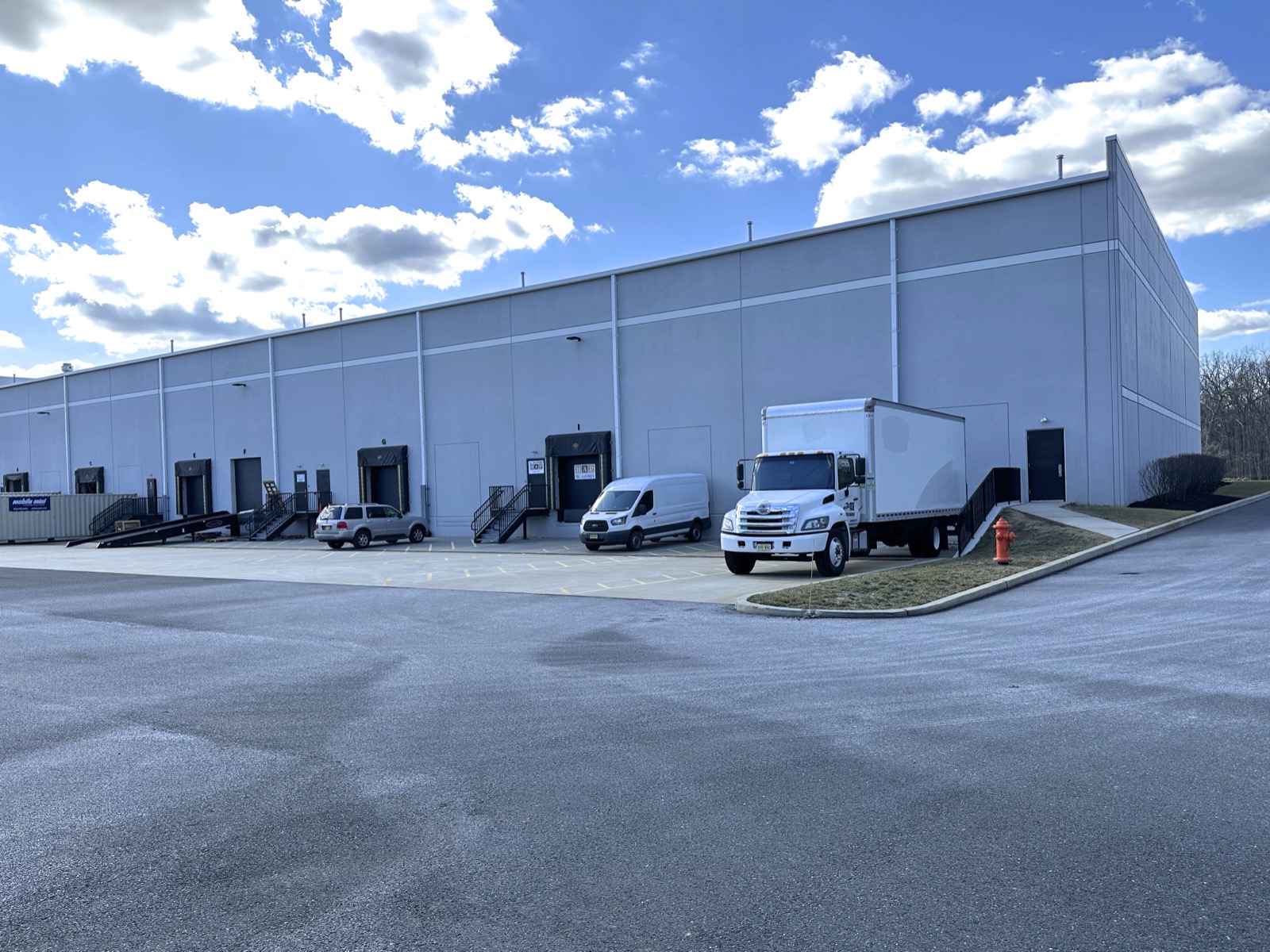
Our headquarters and warehouse sit in Tinton Falls, New Jersey, roughly an hour from the Javits Center and well within striking distance of Atlantic City and Philadelphia, and we have been coordinating trade show freight, exhibit storage between shows, and I&D from here since 1996. Because large-format printing, exhibit fabrication, and kitting all happen in-house, a booth can be inspected, repaired, reprinted, and restaged without ever leaving the building. If your next show is in this corridor, the math is worth a conversation before you book freight.
Frequently asked questions
How does drayage work at the Javits Center?
Javits is a marshaled facility. Your carrier checks in at the marshaling yard, waits to be called to a dock, and the show's general contractor moves freight from the dock to your booth. You are billed by weight, per hundred pounds, and the charge covers the round trip, including empty crate storage during the show and move-out handling.
Can you store a trade show booth between shows?
Yes. Exhibit houses and logistics partners offer storage between shows, and for exhibitors with several Northeast dates it is usually cheaper than shipping the booth home each time. Good storage includes inspection on return, an inventory of components, and time to repair or reprint anything damaged before the next move-in.
What does I&D mean in trade shows?
I&D stands for installation and dismantle: the labor that assembles your booth at move-in and tears it down at move-out. At union venues like Javits, most of this work must be performed by union labor, ordered through the show contractor or an approved provider, and billed hourly with overtime rates on nights and weekends.
How early should freight arrive for a New York trade show?
For most Javits shows, the advance warehouse begins receiving freight about a month before the show and closes several days before move-in; hitting that window is the safest and usually cheapest path. Shipping direct to the venue means hitting a specific target date, with your driver checked in at the marshaling yard early that day.